Showing posts with label Athena. Show all posts

Thursday, March 7, 2013

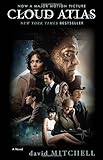
Athena's Review: Cloud Atlas by David Mitchell (2004)

Cloud Atlas by David Mitchell


This was a clever and well written book. It was ambitious and unique.

It took me awhile to read this book. It was on my Kindle so I often forgot I had it and it didn't give me incentive to read it in time like my library books. The other reason I would forget about this book is the different narratives from this book. It is very well written and I liked it more than other books that had this kind of style such as Jennifer Egan's A Visit from the Goon Squad. It does mean that once you get comfortable with one chapter's story, it changes and you have to start all over again.

It took to reading the sixth and final narrative in the middle of the book that I realized what Mitchell was doing. At that point, I had to finish the book. It became gripping and I really liked the every changing structure and tone.

For the full review of the book and the movie, please click here to see it on my blog.

Tuesday, March 5, 2013

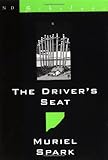
Athena's Review: The Driver's Seat by Muriel Spark (1970)


The Driver's Seat by Muriel Spark

This was a different and strange short novel. Nick Hornby was reading more Muriel Spark in his last compilation noting her ability satisfy with her short novels. Having read The Prime of Miss Brodie, I decided why not.

I started this in the queue to get my passport renewed and it was appropriate because it is about a woman who takes a journey to Italy on a mission. Early on in this story, the reader knows the outcome of Lise the protagonist so there is a certain amount of mystery, suspense and tension on how she gets to the ending.

The story was published in 1970 and the events and even Lise reflect the 1960's. The book has a dark, violent and cruel ending. It is not precise and does not give you a sense of closure, but it's memorable with its unique protagonist and Spark's writing.

I was quite surprised by how dark it was. I was less surprised by the derangement exhibited by the protagonist because I am learning that delusion is a feature of Spark's characters. Characters in the novel seem to talk at each other than with each other.

This is a story where I didn't relate to anyone or any concept, but I did like the writing and found the plot provocative and the characters odd. I won't likely forget Lise for awhile. I'm not surprised this was shortlisted for the Lost Booker Prize as it seems like a Booker story too.

Originally posted on my blog Aquatique.

Sunday, April 1, 2012

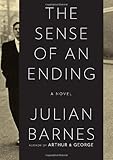
The Sense of an Ending by Julian Barnes review by Athena

Originally posted at Aquatique.

The Sense of Ending

This was my first Julian Barnes book, and I don't think it will be my last. I'm curious about his other works now. I think I rather enjoyed myself even though there were few real characters and a perplexing ending.

The themes of the novel are those of memory, history, self-awareness, and mortality. I think given the shortness of this novella, Barnes tackled a lot in a short period of time. An excerpt from the book:

I certainly believe we all suffer damage, one way or another. How could we not, except in a world of perfect parents, siblings, neighbours, companions? And then there is the question, on which so much depends, of how we react to the damage: whether we admit it or repress it, and how this affects our dealings with others. Some admit the damage, and try to mitigate it: some spend their lives trying to help others who are damaged; and then there are those whose main concern is to avoid further damage to themselves at whatever cost. And those are the ones who are ruthless, and the ones to be careful of. (p 44)

As I read this book, I didn't expect much in the way of plot movement and so when the plot did move by Tony, the narrator and protagonist, receiving a money from the will of an ex-girlfriend's mother, I was intrigued. From then on, I chased the novel's ending for more on the mysterious Adrian and the full story about him, Veronica, and Sarah. I kept waiting for the twist; there was such a build up to it.

I wasn't annoyed with any of the characters even though it seemed there was not much to give them credit for. Tony is self-obsessed, but I didn't mind his take on things. He's analyzing himself and the whole story seemed to be about him thinking back on his life so I could understood the self-reflection. I was irked with Veronica who kept saying, "You don't get it and you never will!" and I just kept thinking, then tell him about it! She seems to have regressed since young Veronica was about to communicate to Tony about somethings, but not about 'this' (or whatever it is he needs to get) even after their meetings?

When I reached the last two pages, I was perplexed with the ending. Tony said he understood, but I felt dumb because I didn't. I had to go online and read other reviews and blogs to realize that I was suppose to question the ending and what had really happened. Did Tony block out so much of his memory? Why the money from Sarah? Lots of questions. It did make me think which is good enough for any book. I wasn't irked by the lack of ending though.

Books this reminded me of: You Deserve Nothing (which was the last book I read and fit with the earlier chapters of this book), Ian McEwan works such as Atonement, Amsterdam and Solaris, and Iris Murdoch's The Sea, The Sea (not sure why other than it's a Booker by an English person - perhaps it was the self-obsession). Barnes and McEwan have the dry and philosophical English contemporary literature that the Booker panel seems to love. I don't hate McEwan, but I actually think I was less annoyed with Tony in The Sense of Ending than I have been with any of McEwan's narrators. Makes me wonder why I've already read three McEwan novels, but I digress.

I think Barnes has said that you must read the book at least twice to get it. I doubt I will even though I did enjoy this book for the most part. I wasn't as annoyed or irked with the ending or the seeming plot holes as other readers, but I'm not that involved. Maybe I am just use to literary novels (specifically, Booker winners) having these kind of endings. At least I didn't want to throw this one across the room like I did God of Small Things.

Have you read this book and what did you think of it? What are your theories on what really happened? Or did you not care at all?

Here are a couple of links on what other readers thought of the book:

The Man Booker Prize forum thread on the book
The Aslyum Book Review with comments

Saturday, March 31, 2012

Athena ReIntro Post

Hi everyone! I've just rejoined the Complete Booker after a couple of years away. My blog is at Aquatique.net. I didn't have a blog so I couldn't really participate anymore, but I haven't stopped reading Booker Prize winners in this time. I look forward in discussing and participating with everyone.

Here is the list of Booker Prize winners that I have read so far in bolded:


2011 - The Sense of an Ending (Barnes)
2010 - The Finkler Question (Jacobson)
2009 - Wolf Hall (Mantel)
2008 - The White Tiger (Adiga)
2007 - The Gathering (Enright)
2006 - The Inheritance of Loss (Desai)
2005 - The Sea (Banville)
2004 - The Line of Beauty (Hollinghurst)
2003 - Vernon God Little (Pierre)
2002 - Life of Pi (Martel)
2001 - True History of the Kelly Gang (Carey)
2000 - The Blind Assassin (Atwood)
1999 - Disgrace (Coetzee)
1998 - Amsterdam: A Novel (McEwan)
1997 - The God of Small Things (Roy)
1996 - Last Orders (Swift)

1995 - The Ghost Road (Barker)
1994 - How Late It Was, How Late (Kelman)
1993 - Paddy Clarke Ha Ha Ha (Doyle)
1992 - The English Patient (Ondaatje)
1992 - Sacred Hunger (Unsworth)
1991 - The Famished Road (Okri)
1990 - Possession: A Romance (Byatt)
1989 - The Remains of the Day (Ishiguro)

1988 - Oscar and Lucinda (Carey)
1987 - Moon Tiger (Lively)
1986 - The Old Devils (Amis)
1985 - The Bone People (Hulme)
1984 - Hotel Du Lac (Brookner)
1983 - Life & Times of Michael K (Coetzee)

1982 - Schindler's Ark (Keneally)
1981 - Midnight's Children (Rushdie)
1980 - Rites of Passage (Golding)
1979 - Offshore (Fitzgerald)
1978 - The Sea, the Sea (Murdoch)
1977 - Staying on (Scott)
1976 - Saville (Storey)
1975 - Heat and Dust (Jhabvala)
1974 - The Conservationist (Gordimer)
1974 - Holiday (Middleton)
1973 - The Siege of Krishnapur (Farrell)
1972 - G. (Berger)
1971 - In a Free State (Naipaul)
1970 - The Elected Member (Rubens)
1969 - Something to Answer For (Newby)
Monday, October 20, 2008

Possession

This 1990 Booker Prize winner was second only to LOTR on the poll of what books I should take. It seemed to be popular with the visitors and I can understand why. I read this during my unfortunate delay before departure. It was absorbing and while a bit lengthy at over 500 paperback pages, enjoyable. It is complex, literary, stylistically varied, and meta. There are various writing styles employed from poetry, critical academia, memoir writing, fairytales, to epistolary writing. While I found the ending just a tad too maudlin and the modern characters Maud and Roland not as well drawn out as Ash and Christabel, I liked the book overall. Byatt obviously took care in tracing the mystery aspect, and it is certainly not a conventional romance (or romances). It has many themes and interesting implements. It has academics writing not about poets, but also other academics. There's a definite sense of meta literary and commentary beneath the surface. The idea of not only romantic possession, but that which possesses us from the long gone writers. It reminds me of Shakespeare academia and the sheer obsession academics have about him whoever he may be. Just a little thing could just how history views people and how we are enthralled, or "possessed" with the dead and ideas from and of them. I am glad to own this novel as I find that it will be immensely rereadable.

Crossposted from aquatique.net

Tuesday, September 9, 2008

Last Orders

This Booker Prize winning book by Graham Swift tells of four men on a day trip to scatter their friend's ashes to the sea. The chapters are short and the narratives switches with each chapter. Most are told by Ray, the closest friend of the dead man Jack Dodds. There are numerous flashbacks revealing the lives of all the men and a couple of others in their lives. The dialogue is quite sharp and well written; Swift has a knack for characterisation. The language and changing perspectives makes it evocative. I sometimes managed to feel the bitterness and the anger that some of the characters do when they narrate. It is very English; all the characters have a working class background and there is something very stylistic and true about the way he writes about their livelihood. If anything, it feels sincere even if real working class Londoners do not all the issues these characters did. I liked the book for the most part, but it got bit depressing the further you went. The flashbacks reveal missed opportunities, unsaid things, wrong choices, bad luck, and estranged relationships. The ending, as with life, is open ended. Not a very uplifting read, but Swift does have a good voice throughout the story.

For a review of the film as well, go to aquatique.net.

Monday, February 18, 2008

Life and Times of Michael K. by J. M. Coetzee

Set in South Africa, this 1983 Booker Prize Winner by Nobel Laureate (2003) J. M. Coetzee is about a man surviving amidst war, civil unrest, and poverty. There are no chapters, but three sections divide book. The first covers more than 2/3 of the novel. The plot is one of the most depressing I have read in a long time. The prose is stark and observant. Michael K. is a mysterious yet simple character at the same time. The novel makes you ask a lot of questions about the setting, the characters, and the overall meaning and moral of this novel. It was a quick read at 249pages. The writing was bare, but there were some wonderful lines:
I come from a line of children of no end.

Another excerpt:
He is like a stone, a pebble that, having lain around quietly minding its own business since the dawn of time, is now suddenly picked up and tossed randomly from hand to hand. A hard little stone, barely aware of its surroundings, enveloped in itself and it interior life...An unbearing, unborn creature.

There is doubtlessly a lot of criticism and interpretation of this work. There seems to be debates about Michael's race/ethnicity. Is he black or white? There were indications in the book that he goes either way, but Michael himself does not seem to see race. Michael's intelligence or intellectual capabilities are questioned. He does not seem to have much of a sex drive, and his upbringing lacked intimacy or any fun. Finally, the setting is almost dystopian and some critics debate about the actual time of the book. It's hard to say if I liked it or how soon I will pick up another of Coetzee's work again, but it was fascinating read. (Cross posted from my blog Aquatique)

Monday, December 10, 2007

Athena's Bookers for 2008

Hello. I am another person who is a participant of Dewey's Booker Challenge. I blog at aquatique.net. I hope to go beyond my initial six for the challenge and move further into the list.

The God of Small Things by Arundhati Roy
Life & Times of Michael K
Midnight's Children by Salman Rushdie
The Gathering by Anne Enright
Vernon God Little by DBC Pierre
The Remains of the Day by Kazuo Ishiguro

Alternates:
Schindler's Ark by Thomas Keneally
The Sea by John Banville
Posession: A Romance by A. S. Byatt
The Inheritance of Loss by Kiran Desai
...and the rest of the list

Booker Winners I have read:
The English Patient by Michael Ondaatje
Life of Pi by Yann Martel