They departed, the gods, on the day of the strange tide. All morning under a milky sky the waters in the bay had swelled and swelled, rising to unheard-of heights, the small waves creeping over parched sand that for years had known no wetting save for rain and lapping the very bases of the dunes. The rusted hulk of the freighter that had run aground at the far end of the bay longer ago than any of us could remember must have thought it was being granted a relaunch. I would not swim again, after that day. The seabirds mewled and swooped, unnerved, it seemed, by the spectacle of that vast bowl of water bulging like a blister, lead-blue and malignantly agleam. They looked unnaturally white, that day, those birds. The waves were depositing a fringe of soiled yellow foam along the waterline. No sail marred the high horizon. I would not swim, no, not ever again.Someone has just walked over my grave. Someone.
Thursday, June 20, 2013
2005 - The Sea
Wednesday, August 3, 2011
Athena K's Review - The Sea
Then why didn't I love it? The beautiful words and images just washed over me, leaving almost no impression at all. I think the key issue for me was Banville totally failed to make me feel emotionally invested. The main character is a boring man - he even admits it himself!
... the congeries of affects, inclinations, received ideas, class tics, that my birth and upbringing had bestowed on me in place of a personality. In place of, yes. I never had a personality, not in the way that others have, or think they have. I was always a distinct no-one...And I have to say the "big reveal" at the end, was a yawn. The fact that it involved a character who was almost never described or discussed made it feel like a bad mystery novel - how were we supposed to know that person was whodunnit when the author never talked about them!
At least for me, beautiful prose alone ultimately falls flat. I need some more personality.
Monday, February 15, 2010
Lorraine's Review - The Sea - 2005
Although the novel is brief (195 pages) it is a demanding book to read.
I tried hard but found that I was not interested in the characters and did not engage with the writing.
Sunday, February 7, 2010
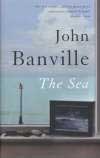
The Sea by John Banville
Despite its relatively small size (just over two hundred pages, double spaced paragraphs) The Sea proved to be a bit of a challenge to plough through. Admittedly, I found the mesmeric prose soporific, but if I had cared more about the characters, the effect might have been different.
The Sea is a tale of a summer during youth and a bereavement, told by an aged man. Returning to the place of numerous childhood summer holidays, Max is seeking a ghost or two, invoking memories, both recent and distant, of two significant episodes of loss.
Oddly, for a novel with death and love lost at its core, it is surprisingly unmoving. Max is both sentimental and supremely cold, veering between accounts of heightened emotions and dispassionate, self deprecatory remarks that belittle his experience and the memory of those he professes to love and cleave to.
Banville clearly has a masterful way with words, but sparkling prose isn’t enough to win me over. Max’s story fails to provoke even conflicted feelings, despite his piteous situation and how this contrasts with his instinct for self-preservation.
Thursday, January 8, 2009
2005 - The Sea by John Banville.
The Sea is a brilliant book. I don't think it can be matched for the quality of its poetic prose or the cleverness of its imagery both sharp and subtle. It arouses intense feelings of nostalgia, loss, impatience and relief - it's really quite extraordinary.Max Morden has lost his beloved wife Anna, and he isn't coping well at all. He's a middle-ranking art historian and he's supposed to be writing a book about Bonnard (a French artist), but he's not getting anywhere because he's wallowing in grief and old memories and alcohol.
His memories revert to childhood. When he was a child he went on holiday to the 'chalet', the cheap part of a holiday village, where he met the Graces, middle-class and socially a step above him and his deserted mother. He becomes a part of their household at The Cedars, playing almost daily with twins Chloe and Myles. He falls in love, as eleven year old boys do, first with the rather slatternly mother (fat, vague, drinks too much) and then with Chloe, fumbling with her at the beach and at the pictures. Disaster strikes when Rose, inept au pair/governess to the twins, catches Max fondling Chloe's budding breasts at the beach and they have a blazing row, culminating inexplicably in Chloe swimming out into an unusually high tide, followed by mute, web-toed and probably intellectually-disabled Myles. They both drown.
The memory of this event is so strong that when Anna dies, Max goes back to The Cedars to grieve. As in Marion Halligan's The Fog Garden, he seems to become lost in memories, overwhelmed by the loss of Anna and the twins. In what passes for life in Miss Vavasour's boarding house, there are some acutely funny descriptions of The Colonel, Miss V and her awful fat friend 'Bun', but the general tone of the book is of unbearable pain and loss, culminating in Max getting so drunk that he knocks himself out at the beach. He has to be rescued ignominiously by the Colonel, and is finally carted off to be rehabilitated by his daughter, Clair, and her droopy boyfriend, Jerome. Ghastly as this ending seems, in the context of what's gone before, there seems to be some hope because Max begins to plan escaping to paint in Paris.
It is a wonderful book, richly illuminating in its portrait of grief unresolved. It also shows Max's painful agonies about which class he belongs to (still an issue in England!) and how needlessly lives can be wasted. Clair has probably left it too late to have either children or the career as an art scholar that she could have had. It is a very moving book, but I loved reading it.
I was on holiday in Italy when I read The Sea, and hated having to leave the book behind. I bought a new first edition when I returned home and had it autographed by Banville when he visited Melbourne!
I finished reading it and journalled it (on scraps of paper, brought home in the suitcase!) in Monterchi, Tuscany, on 20.10.2005.
Lisa Hill, ANZ LitLovers
Monday, May 12, 2008
The Sea - Sharon's Review

Max intersperses his childhood experiences with adult experiences from his relationship with his wife Anna, as they come to grips with mortality via her battle with cancer:
Wednesday, April 23, 2008
Trevor's Review of Banville's The Sea
The story held great promise. After his wife dies, Max Morden, now getting fairly old, goes back to a seaside town where he holidayed as a child. What follows is a mesh of the present and the past, in often beautiful prose. He recalls one particular summer when he met Chloe Grace, a young girl who helps him out of innocence and introduces him to loss.
However, I really didn't enjoy the passages about the past. The most evocative and emotional parts for me were when Max reflects on his late wife. I wanted to spend more time here, but the book (as I remember it) focuses mostly on the tragic past, and it almost felt like it was that way because of the tremendously traumatic, almost sensationally so, summer. More for shock than for what it added to his understanding of his current plight. The present was more subtle, more real, and sadly more remote.
2 stars out of 5.
Friday, March 14, 2008
The Sea by John Banville
This review was originally posted on my blog in February 2006The winner of the Man Booker Prize 2005, The Sea was nominated as the February read for a group I am in, and given that I am supposed to be co leading the discussion, there was an assumption that I would actually read it!! However, a few of the other people read it before I got to it, and to say that the response was not overwhelming is a fair comment. I therefore kept on putting it off until I could do so no longer, thinking that I wasn't going to like it either, but it actually wasn't too bad.
If you want a crisp outline of the plot, I probably can't do that. In effect this is the story of a man who, in dealing with an extremely pivotal point in his life, is looking back to another pivotal point years earlier.
If you want likeable characters... I don't think I can give you that either. The main character Max is an art historian, and there are lots of references to artists and classic literature to show this to us. The other main characters are Anna his wife, who's role in the book is as a catalyst, and the Grace family, Mr and Mrs Grace and their two children Myles and Chloe.
Do you want lots of actions, lots of events? Hmmm....nope, not much action either. Lots of introspection and memories. Over half way through I was still struggling to figure out what the book was about.
Having said that, whilst The Sea is a meandering trip through two events in a man's life, the writing is beautiful, with many descriptions and evocative word pictures. By the end of the book I was engaged, and was even reading it while waiting for the lights to change on my drive to work. I had however figured out the two big secrets early on, leaving just one that I didn't realise before time.
One of the main reasons that this book was nominated was because last year we read Never Let Me Go by Kazuo Ishiguro and I thought it would be fun to compare a book that was nominated with the eventual winner. It will be interesting to see what others thought! I also read the 2004 Man Booker winner, Line of Beauty by Alan Hollinghurst, and wonder if maybe I am not cut out for fine literature as this book didn't blow me away either.
Overall, not bad, but I would like a Pulitzer or Booker or other major prize winner to really draw me in, and hold me there, and blow me away. Maybe the next one will.
Friday, August 17, 2007
The Sea - 3M's Review
The Seaby John Banville
2005, 195 pp.
2005 Booker Prize
Rating: 2
This was not my cup of tea. I don't need an exciting plot to enjoy a book. I don't mind older men looking back on their lives. In a similar vein, I loved Marilynne Robinson's Gilead, although I hated Roth's Everyman. This was closer to Everyman.
Max is a widower that is overly sensitive to smells who is grieving (I guess?) over his wife. He calls her the "c" word and admits he really didn't know her because he preferred not to know her.
Not one character in the book was likable. I guess I was lucky this was short.