Showing posts with label 2004 - Shortlist. Show all posts
Thursday, March 7, 2013
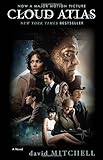
Athena's Review: Cloud Atlas by David Mitchell (2004)
This was a clever and well written book. It was ambitious and unique.
It took me awhile to read this book. It was on my Kindle so I often forgot I had it and it didn't give me incentive to read it in time like my library books. The other reason I would forget about this book is the different narratives from this book. It is very well written and I liked it more than other books that had this kind of style such as Jennifer Egan's A Visit from the Goon Squad. It does mean that once you get comfortable with one chapter's story, it changes and you have to start all over again.
It took to reading the sixth and final narrative in the middle of the book that I realized what Mitchell was doing. At that point, I had to finish the book. It became gripping and I really liked the every changing structure and tone.
For the full review of the book and the movie, please click here to see it on my blog.
Monday, January 21, 2013
Marie C. Reviews Cloud Atlas by David Mitchell
Cloud Atlas, by David Mitchell. Published 2004 by Random House.Cloud Atlas is a weird and intriguing book. Encompassing large ranges of time and space, and arranged in a matryoshka-doll format, it's composed of a series of short stories that nestle inside each other, connected in ways subtle and overt. The stories also represent different literary styles, and show evolution in the human condition as well as in language and expression.
The first story, "The Pacific Journal of Adam Ewing," which begins and ends the book, is a historical fiction about a man and his adventures in New Zealand of the early colonial period (I think). The next is an epistolary tale set in the early 20th century, then a crime story, then a first-person contemporary narrative, then a futuristic dystopia, then a far-future post-apocalypse. The stories go 1-2-3-4-5-6-5-4-3-2-1 and each first part ends on a cliffhanger that the second part picks up immediately where the first part leaves off.
And how are they connected? That's for you to find out when you read it. I picked it up because it's been selling like crazy at the bookstore, and I wanted to be able to talk to my customers about it and recommend what to read next when they come back. I can do that now, and I'm glad that I read it. And I really enjoyed it. It's heavier lifting in literary terms than I'd been doing for a while, and it felt good to read a hard book again- a change from the fluffy crime fiction and homeworky new releases I read too much of. The stories are delightful, and a couple are quite wonderful. I particularly enjoyed the dystopic "Orison of Somni-451," about the rebellion of a sentient robot, and "The Ghastly Ordeal of Timothy Cavendish," a flat-out hilarious adventure of what happens to an elderly and particularly myopic publisher when he runs afoul of some thugs.
I'd recommend Cloud Atlas to readers not afraid of doing that heavy lifting but I'll say I found the book a lot more accessible than I thought it would be. If you're wondering if you should read it, I say give it a shot. Stretch yourself if it's not normally your thing, and just try it. You might even like it. "'Catch you all next time.'" Luisa is going. "'It's a small world. It keeps recrossing itself.'" Just like the book.
Friday, January 20, 2012
Athena K's review - Bitter Fruit
Set in post-apartheid South Africa, the Ali family's broken relationships are on display in this miserable little novel. The Bitter Fruit of the title is embodied in Silas Ali's warm beer of escape, white Kate and Julian's experience in the newborn democracy in which they are no longer wanted, and, most especially, Lydia Ali's son Mikey, born after her rape over 19 years ago.
Achmat Dangor's expression of all of this bitterness is in the various troubled sexual activities, encounters and desires of his cast of characters. They include the violence of rape, the apathy of unwanted marital sex, inappropriate seduction between age groups, infidelity, homosexuality (female and male), and incestuous urges and actions of all kinds: father/daughter, mother/son and nephew/aunt. After a while, these sexual encounters lost their shock value - and did not appear to have any other important value. This theme seemed like a badly-contrived plot device in lieu of an actual story or compelling characters, and I was over it long before it was over.
Other themes that I might have found interesting emerged late in the story, including the amorphous definition of race and the plurality of religion possible within a single family in modern South Africa. Perhaps because I was not a native reader I had a hard time figuring out each character's racial identity - and I couldn't determine whether this was because of my ignorance in picking up on cues particular to the country, or whether it was intentional on behalf of Achmat Dangor. Religions seemed a bit more obvious, and the way each character is liberated and also confined by his or her religious upbringing was teased out nicely. However, it wasn't enough in the end to encourage me to care about the characters at the climax of the action, or to care about the unresolved pieces.
Thursday, April 24, 2008
Trevor's Review of Mitchell's Cloud Atlas
I don't know what to write about this book except that I loved it. Each of the six stories were wonderful reads, each engaging, suspenseful, deep in their own way. How could one writer execute so many distinct voices and styles so well? Mitchell is a master of language--he even succeeds in creating a distinctly unique yet familiar language in the last stories that take place years in the future.
The book gets a lot of criticism because the connection between the stories is not apparent except that some of the names and features of the characters are the same. However, the title of the book offers a clue as to how the stories flow from one to the other and then back again. Furthermore, a distinct theme that runs through all is control and dominion. Though the setting of the different stories differs greatly, there is this little bit of human nature that remains. It was brilliant! I think it is a better book than most Booker winners I've read.
5 stars out of 5.
The book gets a lot of criticism because the connection between the stories is not apparent except that some of the names and features of the characters are the same. However, the title of the book offers a clue as to how the stories flow from one to the other and then back again. Furthermore, a distinct theme that runs through all is control and dominion. Though the setting of the different stories differs greatly, there is this little bit of human nature that remains. It was brilliant! I think it is a better book than most Booker winners I've read.
5 stars out of 5.
Tuesday, December 11, 2007
Laura's Progress - Booker Shortlists read in 2007 or before
I became a Booker Prize devotee when I lived in England from 2000-2004. The short- and long-lists were a primary source for my TBR pile. I really enjoyed becoming acquainted with a number of excellent authors, and have continued to follow the prize every year. Reviews are available for the three that I read in 2007:
2007
2007
- The Reluctant Fundamentalist, by Mohsin Hamid - review
- Arthur & George, by Julian Barnes - review
- Never Let me Go, by Kazuo Ishiguro - review
- On Beauty, by Zadie Smith
2004
- Cloud Atlas, by David Mitchell - review
- Notes on a Scandal, by Zoe Heller
- Brick Lane, by Monica Ali
- Story of Lucy Gault, by William Trevor
- Unless, by Carol Shields
- The Dark Room, by Rachel Seiffert
- Atonement, by Ian MacEwan
- The Hiding Place, by Trezzo Azzopardi
- When we Were Orphans, by Kazuo Ishiguro
- English Passengers, by Matthew Kneale
- The Stone Diaries, by Carol Shields
Monday, December 10, 2007
Cloud Atlas - Wendy's Review

If we believe that humanity may transcend tooth & claw, if we believe divers races & creeds can share this world as peaceably as the orphans share their candlenut tree, if we believe leaders must be just, violence muzzled, power accountable & the rices of the Earth & its Oceans shared equitably, such a wold will come to pass. -From Cloud Atlas, page 508-
David Mitchell's novel, Cloud Atlas, is at once brilliant, far reaching in scope and immensely creative. I read this book like an addict - hanging on the words, seeking the answers, caught up in the worlds Mitchell flawlessly creates. I feel like I could re-read this book several times and continue to find new meanings each time. David Mitchell is a newly discovered author for me - and I am in awe of his talent. I will most certainly be reading his other two novels -Ghostwritten AND Number9Dream - in the very near future.
Cloud Atlas appears to be six seemingly disparate stories, but they are woven together and connected as the novel progresses. Tucked into the stories, Mitchell alludes to the novel's structure at least twice.
Spent the fortnight gone in the music room, reworking my year's fragments into a "sextet for overlapping soloist": piano, clarinet, 'cello, flute, oboe, and violin, each in its own language of key, scale, and color. In the first set, each solo is interrupted by its successor: in the second, each interruption is recontinued, in order. -From Cloud Atlas, page 445-
One model of time: an infinite matroyoshka doll of painted moments, each "shell" (the present) encased inside a nest of "shells" (previous presents) I call the actual past but which we perceive as the virtual past. The doll of "now" likewise encases a nest of presents yet to be, which I call the actual future but which we perceive as the virtual future. -From Cloud Atlas, page 393-
Confused? Don't be. Mitchell brings it all together in an incredible symphony of writing brilliance. Not only does he create memorable characters, he weaves his words like a painter - fabricating beautiful descriptions of setting.One model of time: an infinite matroyoshka doll of painted moments, each "shell" (the present) encased inside a nest of "shells" (previous presents) I call the actual past but which we perceive as the virtual past. The doll of "now" likewise encases a nest of presents yet to be, which I call the actual future but which we perceive as the virtual future. -From Cloud Atlas, page 393-
The tropic sun fattens & fills the noon sky. The men work seminaked with sun-blacked torsos & straw hats. The planking oozes scorching tar that sticks to one's soles. Rain squalls blow up from nowhere & vanish with the same rapidity & the deck hisses itself dry in a minute. Portuguese man-o'-wars pulsate in the quick-silver sea, flying fish bewitch the beholder & ocher shadows of hammerheads circle the Prophetess. -From Cloud Atlas, page 37-
I was excited to see Eva van Outryvede Crommelynck (a wonderful character from Mitchell's latest novel, Black Swan Green) make an appearance in this one as a young girl. It gives me some cautious hope that in a future novel we might seen the dynamic and lovable Jason Taylor again!A common theme in Cloud Atlas is that of power as a destructive force. Mitchell writes:
'What drives some to accrue power where the majority of their compatriots lose, mishandle, or eschew power? Is it addiction? Wealth? Survival? Natural selection? I propose these are all pretexts and results, not the root cause. The only answer can be 'There is no "Why." This is our nature.' 'Who' and 'What' run deeper than 'Why.' -page 129-
AND
The will to power, the backbone of human nature. The threat of violence, the fear of violence, or actual violence is the instrument of this dreadful will. You can see the will to power in bedrooms, kitchens, factories, unions, and the borders of states. Listen to this and remember it. The nation-state is merely human nature inflated to monstrous proportions. -page 444-
Ultimately, Mitchell evokes a world where all humans are connected - like souls which 'cross ages like clouds cross skies.' This is truly a beautifully written novel which will stay with the reader long after the final page has been turned.AND
The will to power, the backbone of human nature. The threat of violence, the fear of violence, or actual violence is the instrument of this dreadful will. You can see the will to power in bedrooms, kitchens, factories, unions, and the borders of states. Listen to this and remember it. The nation-state is merely human nature inflated to monstrous proportions. -page 444-
Highly recommended; rated 4.75/5.
Subscribe to:
Posts (Atom)