Sunday, March 30, 2008

Laura's Review - The Bone People


The Bone People
Keri Hulme
445 pages


"A family can be the bane of one's existence. A family can also be most of the meaning of one's existence. I don't know whether my family is bane or meaning, but they have surely gone away and left a large hole in my heart." (p. 242)

Keri Hulme's Booker prize-winning novel is about the healing power of relationships and family bonds. Kerewin is an artist and recluse, unmarried and estranged from her family. Joe is a widowed laborer with a violent temper. Simon, Joe's foster son, lost his parents in a boating accident. Simon's specific identity is unknown, he cannot speak, and he has suffered severe emotional trauma. These three very lonely people come together when Simon breaks into Kerewin's house. Slowly, tentatively, Joe and Simon reach out to Kerewin. Slowly, tentatively, she accepts their attentions. After a long holiday at a seaside camp they are as close to a family as any of them have ever experienced. However, the dark side of each character looms large, and when the inevitable happens each character is shaken to their very core and must choose when and how to begin the healing process.

Hulme's writing style is unorthodox, yet I found this book difficult to put down. I was completely committed to the characters, despite their often significant flaws. The insights into Maori culture were interesting. Although I was a bit uncertain how the ending came together the way it did, I very much enjoyed the journey. ( )

My original review can be found here.

An introduction from me

Hello -- I'm Mel, a newly-joined author of posts to The Complete Booker blog.

I joined after I accidentally came across the blog on the Internet. I'm retired, my wife and I are "snowbirds" who spend seven months a year in SE Florida (the remaining five in NE Ohio), and among my "retirement skills," in addition to tennis, travel and bridge, is reading, something I've loved doing ever since I first learned how to read as a young child.

About 4-5 years ago, I discovered the books that were awarded the Booker prize (plus those that were nominated for the long- and short-lists every year), and for my fiction reading (which comprises about two-thirds of my reading), I normally turn to the "Booker" books. Overall, I find them to be intelligent, creative and highly entertaining. (Other, non-Booker books -- by, say, American authors, I obtain and then read after I've perused The New York Times annual best books list, and from the latter list I've recently read Richard Ford's "The Lay of the Land" and Denis Johnson's "Tree of Smoke.")

My non-fiction tends to revolve around history and politics, and I've just finished Thomas Ricks' "Fiasco," one of several critiques of the American presence in Iraq that I've read during the past several years.

Booker Award winners that I've read include: "Possession: A Romance," "Life of Pi," "Disgrace," "The Blind Assassin," "The Line of Beauty," "The Ghost Road," "Amsterdam," "How late it was, how late," and "The Inheritance of Loss." (That would make me a 9-Booker-Award-winner reader, with, as of this writing, 32 still to go!)

However, one of the many great things about reading books that are in contention for the Booker is that all -- well, perhaps most -- of them are also great reads, and, in my opinion, were also quite worthy of receiving the award. Case in point: the 2004 Award went to "The Line of Beauty," a great read, but had either "Cloud Atlas," "The Master" or "The Electric Michelangelo" been given the Award, Booker followers would have been well served just as well.

A similar situation was true last year; although I've yet to read "The Gathering," which took first-place, "Mister Pip" (I felt) was outstanding.

So -- winners or not, here's to great reading and more wonderful novels worthy of the Booker Award designation.


MEL VOGEL

Tuesday, March 25, 2008

You Must Read This: Sacred Hunger

On March 24, National Public Radio's All Things Considered broadcast a review of the 1992 co-winner, Sacred Hunger. This was part of the "You Must Read This" series, which airs regularly on the program. I had not heard much about this book before, but author Ethan Canin's review certainly piqued my interest.

Have you read Sacred Hunger? Post a comment ... or better yet, post your review!

Friday, March 21, 2008

Winnie and Wolf by AN Wilson

This was originally posted on my blog in October 2007
Winnie and Wolf is the story of the extraordinary relationship between Winifred Wagner and Adolf Hitler that took place during the years 1925–40, as seen through the eyes of the secretary at the Wagner house in Bayreuth.

Winifred, an English girl, brought up in an orphanage in East Grinstead, married at the age of eighteen to the son of Germany’s most controversial genius, is a passionate Germanophile, a Wagnerian dreamer, a Teutonic patriot.

In the debacle of the post-Versailles world, the Wagner family hope for the coming, not of a warrior, a fearless Siegfried, but of a Parsifal, a mystic idealist, a redeemer-figure. In 1925, they meet their Parsifal – a wild-eyed Viennese opera-fanatic in a trilby hat, a mac and a badly fitting suit. Hitler has already made a name for himself in some sections of German society through rabble-rousing and street corner speeches. It is Winifred, though, who believes she can really see his poetry. Almost at once they drop formalities and call one another ‘Du’ rather than ‘Sie’. She is Winnie and he is Wolf.

Like Winnie, Hitler was an outsider. Like her, he was haunted by the impossibility of reconciling the pursuit of love and the pursuit of power; the ultimate inevitability, if you pursued power, of destruction. Both had known the humiliations of poverty. Both felt angry and excluded by society. Both found each other in an unusual kinship that expressed itself through a love of opera.

In A.N. Wilson’s most bold and ambitious novel yet, the world of the Weimar Republic and Nazi Germany is brilliantly recreated, and forms the backdrop to this incredible bond, which ultimately reveals the remarkable capacity of human beings to deceive themselves.

I added this book to my TBR list when it was placed on The Booker Prize long list without even realising what it was about. Although this book didn't make it onto the shortlist, with the winners announcement just days away it seemed as though it was probably time to read at least one of the nominees! And besides someone else had requested it from the library, so I couldn't extend it again!

The blurb for this book in some ways describes only one aspect of the story that we read in it's pages, although it is the main part of the book. Not only is there the friendship between Winnie and Wolf, otherwise known as Winifred Wagner (daughter in law of the famous opera composer) and Adolf Hitler, there is the question of how was it that Hitler came to be the leader of Germany, and intertwined throughout this are various threads about the life of Richard Wagner and details relating to the staging of the Wagner festivals in Bayreuth during the 1930s.

Our narrator is an unnamed man, who is writing his story from behind the Iron Curtain in East Germany. He was secretary/administrator to Siegfried Wagner, (son of Richard and composer/ Wagner Festival director) and therefore was quite involved in the personal lives of the Wagner family. The reason our narrator is unnamed is that he is afraid of the dreaded Stasi police in East Germany - afraid mainly for himself - but also having been afraid for his daughter, even though she has long ago fled to the West.

He confesses through the pages things he could not confess even to his wife - that he knew a very different Hitler - a man who had a way with children and pets, who loved opera to the point of obsession, and that the narrator had had an unrequited love for Winnie (although his wife had pretty much guessed that!) . But make no mistake, this is not an book which tries to repaint the picture of Hitler as we know him, but more asks a couple of questions. How did this man become one of the most popular leaders in Germany ever? How could individuals and the German people as a whole have pretty much turned a blind eye to the early signs of what was to come? Was the fact that they went from a country in deep economic depression full of starving people to what appeared to be a viable economy enough to ignore the fact that people were being murdered and SS gangs were roaming the streets and towns, that there were camps set up where anyone opposed to the regime were being sent, even before WWII began.

From Page 33:

Is our capacity to love another person often (always) accompanied by an inability to notice what it is that prevents the majority of other people loving them? (In the case of Wolf there are many complicated factors at work, of course, since he was extremely popular, the most popular political leader our country had ever had - so were we all suffering from the same delusion as Winnie?)

This wasn't a book that I could sit down and read in one sitting having become absolutely absorbed in. It is the kind of book that you have to work at. The storyline meanders from one of the threads to another and then back again, with a large cast of famous and infamous characters. Yet it works.

Not long after I finished it, I was asked whether I liked this book, and my answer was I really don't know. Is it possible to like a book that features Hitler as a character? The various facets of the story are interesting, the writing is challenging, and I am sure that if I really loved Wagner or opera in general that I might have been really captivated.

Trying to grade it was also therefore somewhat difficult. It wasn't so average that it should be 3.5 but if we want to go just on enjoyment that is probably around the mark. In the end, it was interesting enough and challenging enough to deserve the mark that I eventually gave it. Maybe I should just split the difference!

Would I rush out and buy more books by A N Wilson...probably not. Am I maybe just a tiny bit interested in seeing whether I can find some snippets of the operas mentioned in the novel.....yes. If I don't do that within the next couple of days will I forget about it? It's a definite maybe!

Rating 4/5

Sunday, March 16, 2008

The Gathering


Family history, which is for the most part oral tradition, relies on memory and is therefore changeable. The Gathering by Anne Enright (fiction, 2007 Man Booker Prize winner, 261 pages) explores the relationship between memory and truth, and the possibility of multiple truths. Not in the way of Peggy Seltzer, stealing others' lives whole cloth and making them your own, but in the way that fragments of memory are stitched together, with outside details sometimes pulled in to make them whole.


As Veronica Hegarty brings her brother's body back to Ireland and her family gathers for the wake, she recounts to us her family's history and the past secrets about her brother Liam that she has kept to herself since childhood, secrets that may have tormented Liam to his eventual suicide. Veronica is an unreliable narrator--she as much as tells us so. Early on, she tells the story of her grandmother Ada's first meeting with Lambert Nugent, a meeting that is to echo throughout the generations of the Hegartys, mesmerizing the reader with the story and its possible outcomes, and then pulling out the rug with her admission that she imagined it all. The reader is left with decisions as to what is real and what is not, and whether, in the end, the reality or unreality of the stories matter.


Veronica and Liam's family is huge (12 children), with the requisite alcoholics and priests, and they tend to blend together. I was particularly intrigued by the mysterious Alice, the only surviving sibling never to arrive onstage. But the story is primarily concerned with the tight duo of Veronica and Liam, with the next stairstep, Kitty, tagging close behind, and what may or may not have happened to Liam, what Veronica may or may not have seen, when the three children stayed with Ada one year while Veronica was eight and Liam was nine.

Veronica is an angry woman, and The Gathering is one long, searing howl of rage and pain. Enright's brilliant, incisive writing for the most part overcomes the familiar territory over which this very Irish novel treads, although some of her creative touches, such as her references to bodies, living and dead, as meat, can wear thin with repetition. The book is well done, but draining. And it leaves the reader with more questions than it answers. This is a book that will stay with readers for a long time, and can lead to examinations of our own personal family histories.

Friday, March 14, 2008

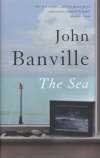
The Sea by John Banville

This review was originally posted on my blog in February 2006

The winner of the Man Booker Prize 2005, The Sea was nominated as the February read for a group I am in, and given that I am supposed to be co leading the discussion, there was an assumption that I would actually read it!! However, a few of the other people read it before I got to it, and to say that the response was not overwhelming is a fair comment. I therefore kept on putting it off until I could do so no longer, thinking that I wasn't going to like it either, but it actually wasn't too bad.

If you want a crisp outline of the plot, I probably can't do that. In effect this is the story of a man who, in dealing with an extremely pivotal point in his life, is looking back to another pivotal point years earlier.

If you want likeable characters... I don't think I can give you that either. The main character Max is an art historian, and there are lots of references to artists and classic literature to show this to us. The other main characters are Anna his wife, who's role in the book is as a catalyst, and the Grace family, Mr and Mrs Grace and their two children Myles and Chloe.

Do you want lots of actions, lots of events? Hmmm....nope, not much action either. Lots of introspection and memories. Over half way through I was still struggling to figure out what the book was about.

Having said that, whilst The Sea is a meandering trip through two events in a man's life, the writing is beautiful, with many descriptions and evocative word pictures. By the end of the book I was engaged, and was even reading it while waiting for the lights to change on my drive to work. I had however figured out the two big secrets early on, leaving just one that I didn't realise before time.

One of the main reasons that this book was nominated was because last year we read Never Let Me Go by Kazuo Ishiguro and I thought it would be fun to compare a book that was nominated with the eventual winner. It will be interesting to see what others thought! I also read the 2004 Man Booker winner, Line of Beauty by Alan Hollinghurst, and wonder if maybe I am not cut out for fine literature as this book didn't blow me away either.

Overall, not bad, but I would like a Pulitzer or Booker or other major prize winner to really draw me in, and hold me there, and blow me away. Maybe the next one will.

Thursday, March 13, 2008

The Stone Diaries - 3M's Review

The Stone Diaries by Carol Shields

1993, 361 pp.

1995 Pulitzer/1994 NBCC Award

Rating: 4.5

I loved this book. I loved the writing. It isn't a heartwarming book, but it is a thoughtful one. These "diaries" chronicle Daisy Goodwill's life from her birth in 1905 to her death in 199? (we aren't told the exact year). Each chapter of her life is told from her point of view, although in the book (and sometimes even in a single sentence) she switches back and forth between 1st and 3rd person. We learn of her childhood, her marriages and children, loves and losses, work and leisure, and finally her old age and death. The "chapters" made me think of my own life stages so far and the ones that are to come. All of us have a similar beginning and ending, but it's the middle that makes life interesting.

There were many, many beautiful passages in this book. I'll leave you with one as an example of the excellence of Shields' writing:
Something has occurred to her--something transparently simple, something she's always known, it seems, but never articulated. Which is that the moment of death occurs while we're still alive. Life marches right up to the wall of that final darkness, one extreme state of being butting against the other. Not even a breath separates them. Not even a blink of the eye. A person can go on and on tuned in to the daily music of food and work and weather and speech right up to the last minute, so that not a single thing gets lost.

Carol Shields died of cancer in 2003. She was a gifted writer, and I definitely plan on reading more of her works.

The Handmaid's Tale - 3M's Review

The Handmaid’s Tale
by Margaret Atwood

1986, 311 pages

Rating: 4.5

What a thought-provoking book!

Offred (Of Fred) is a woman who had her child and all her money taken away from her by the government. Her money was taken away just because she was female. Her daughter was taken away because her marriage was declared invalid. Why? Because it was the second marriage for her husband. The government has “religious” motivations for these acts. (Something I was a little uncomfortable with because I am a Christian, yet I realize there are always extremists. I took this as a cautionary tale.)

Spoiler alert! (Don’t read if you like to be in suspense during a book.)
.
.
.
Things only get worse from there. She is forced to become a handmaid, or surrogate mother, for a man of high position in the government. However, the conception is to occur in the normal way–with the wife present! This was a little shocking to me! Somehow Atwood pulls this off without offending my prudish sensibilities. The life of Offred is certainly not enviable.

I found this book to be a jolt to my system. Atwood is a gifted writer, and I definitely plan on reading more of her works.

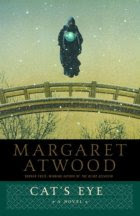
Cat's Eye - 3M's Review

catseye.JPGI loved this book, perhaps even more than The Handmaid's Tale, which I also rated 4.5. Whereas The Handmaid's Tale was mostly a cautionary tale about men's subjugation of women, Cat's Eye is about girls subjugating and intimidating other girls. Elaine Risley as an adult is a successful artist, but as a little girl she was bullied by her friends and their ringleader, Cordelia. What makes little girls (and big ones!) do this, and why do the ones being tormented let them do it?

In an interview in the back of the book, Atwood states this is her most autobiographical novel, and she states the theme of the book as follows:
Cat's Eye is about how girlhood traumas continue into adult life. Girls have a culture marked by secrets and shifting alliances, and these can cause a lot of distress. The girl who was your friend yesterday is not your friend today, but you don't know why. These childhood power struggles color friendships between women. I've asked women if they fear criticism more from men or from other women. The overwhelming answer was: "From women."

In typical Atwood fashion, there were also themes concerning male-female relationships. In one painting of Elaine's, called Falling Women, she describes what was meant in the artwork:
There were no men in this painting, but it was about men, the kind who caused women to fall. I did not ascribe any intentions to these men. They were like the weather, they didn't have a mind. They merely drenched you or struck you like lightning and moved on, mindless as blizzards. Or they were like rocks, a line of sharp slippery rocks with jagged edges. You could walk with care along between the rocks, picking your steps and if you slipped you'd fall and cut yourself, but it was no use blaming the rocks.

That must be what was meant by fallen women. Fallen women were women who had fallen onto men and hurt themselves. There was some suggestion of downward motion, against one's will and not with the will of anyone else. Fallen women were not pulled-down women or pushed women, merely fallen.

Definitely one to read if you've enjoyed other Atwood novels.

1988, 462 pp.
Rating: 4.5

Wednesday, March 12, 2008

Terri - intro

Hello everyone! I just joined up with the Booker challenge today. Of all the myriad challenges out there, it has the most books that interest me. I've read just three of the winners: Hotel du Lac, Moon Tiger and The Life of Pi. I've read quite a few of those on the shortlists : Mrs Palfrey at the Claremont, Quartet in Autumn, A Month in the Country, The Handmaid’s Tale, Cat’s Eye, The Stone Diaries, Alias Grace, Fingersmith. A surprising number of the winners are on my to-be-read shelf (or as some of us call it, Mount TBR).

My goal is to eventually read all the winners (even though there are a few of them I'm sort of dreading). I'm also going to choose liberally from the shortlists. Some great looking reads there.

In the next six months, I plan to read:
The Bone People
Oscar and Lucinda
The Remains of the Day
Possession
The Blind Assassin
The Inheritance of Loss

Happy to be here - thanks, Laura, for welcoming me.

Terri

Monday, March 10, 2008

bethany's intro and progress

I am new. My name is bethany and I am at B&b ex libris!Come drop by if you are interested.
Okay, so there are only 41!?!? I think I can do that! (let's see!) It may take a while.
I have not read ANY of the books on this list. yep, that is true! So, I'll need to get moving here, right? Here are the ones that I own that I will work on first.

2006 - The Inheritance of Loss (Desai)
2002 - Life of Pi (Martel)
1997 - The God of Small Things (Roy)

The Gathering - Wendy's Review

I would like to write down what happened in my grandmother’s house the summer I was eight or nine, but I am not sure if it really did happen. I need to bear witness to an uncertain event. -From The Gathering, page 1-

Anne Enright won the 2007 Booker Prize for this novel set in Dublin which centers around a woman’s long repressed childhood memories. Veronica Hegerty is one of twelve children - a large and dysfunctional family with dark and unspoken secrets. The suicide of Veronica’s wayward brother Liam provides the catalyst for Veronica’s traumatic memories to surface. Told from Veronica’s point of view and switching from past to present and back to past again, the story is a twisting tale about the reliability of long buried events and the importance of uncovering secrets. Veronica’s revelations about what happened in her grandmother’s home so many years in the past are tangled up in alternative stories fabricated by Veronica, woven together with guilt and shame.

Veronica is a cold, cynical person - angry with her mother’s passivity, confused about her brother’s choices, and ambivalent about her siblings.

Meanwhile, the train chunters through England, clicketty-clack, and Bea talks on, sitting on my dead father’s knee with a ribbon in her hair, like the good little girl she has always been, and I look at the hills, trying to grow up, trying to let my father die, ring to let my sister enter her adolescence (never mind menopause). -From The Gathering, page 43-

She is a woman struggling in a rocky marriage which is made more unstable by Veronica’s negative view of men. But, she is not all hardness and anger. Veronica’s love for her children leaps from the pages and as the novel unfolds, the reader is drawn to Veronica, wanting to understand her and make sense of her life.

Enright leaves the reader with ambiguity in the end. The facts are hazy and the outcome of all the characters’ futures are unsure.

The power of this novel comes from Enright’s fresh language and her ability to expose her characters’ faults. Time and again I found myself stunned by the searing choice of words and phrasing; the graphic descriptions; and Enright’s ability to take the reader to an uncomfortable place to drive home her point.

The Gathering is a tough book which deals with a difficult subject matter. Enright seems to purposefully set out to shock the reader - dragging her through the muck of dysfunction and pain, stirring up the sediment in the lives of the characters to reveal their souls. Written with a great deal of intelligence, unerringly true to its characters, and staggering in its scope - The Gathering is a novel which is not easily forgotten.

Highly recommended; rated 4.5/5.

Friday, March 7, 2008

On Chesil Beach by Ian McEwan

A short novel of quite remarkable depth, power and poignancy by a writer at the height of his powers.

It is July 1962. Edward and Florence, young innocents married that morning, arrive at a hotel on the Dorset coast. At dinner in their rooms they struggle to suppress their private fears of the wedding night to come....

On Chesil Beach is another masterwork from Ian McEwan - a story of lives transformed by a gesture not made or a word not spoken.


I'm going to give you fair warning - there is going to be a lot of intro to explain what I am doing with this review. I actually wasn't intending to write this review just yet - there are numerous other books that I was going to do first, but then last night I made a small discovery that I thought I might share.

First, a bit of an introduction. The First Tuesday Book Club is a book review show that is shown on the ABC (our public broadcaster - think the BBC without the funding) on the first Tuesday of each month. The regular reviewers are Marieke Hardy (grand daughter of a famous Australian author and actress, screenwriter and blogger in her own right), Jason Steger (book editor of The Age and The Sunday Age) and Jennifer Byrne (journalist and presenter), and they are joined each month by two guest reviewers. The two guest reviewers in this clip were Robyn Butler who is a comedian who just did a comedy series called The Librarians for the ABC, and Geoffrey Robertson (business man as far as I can tell).

My small discovery was that you can view all the reviews online, and that there is one there for On Chesil Beach by Ian McEwan. So by clicking on the link below you will be taken to the First Tuesday Book Club site, and will be able to watch just under 10 minutes of discussion (warning - lots of spoilers!)


On Chesil Beach discussion


So which of the reviewers did I agree with?

Well, I didn't weep buckets, but I didn't hate it to the point that I would take the risk alienate my spouse (if I had one), so I guess that I am with Jason. There were definitely some good parts of the book, but it did have problems! The set up of the story was excellent, and the ending was moving in a 'my goodness how did these people just let life pass them by' kind of way. The biggest problem for me is that the lack of communication between two people who are seemingly so in love just didn't work for me.


Originally posted at Reading Adventures March 2008

Saturday, March 1, 2008

Atonement - 3M's Review

This was not an easy book to read. It is in three parts, of which I found the first to be the most difficult to get through. By difficult I mean slow, detailed, and plodding. There is very little dialogue throughout the book. Most of the writing consists of the characters’ inward thoughts and feelings.

It is a story about Briony, who at 13 years old accuses a family friend of a horrible crime. This occurs in Part 1, which takes up half the book. The aftermath of that accusation, along with the characters’ involvement in World War II make up Parts 2 and 3. I don’t like reading about war, but I actually liked this part of the book the most. That was a surprise to me. By the end, Briony is 77 and reflecting on her life events and how they have affected her family.

Overall, I didn’t enjoy this book very much, but I am glad I read it. I’ll probably read at least one more book by this author before passing a final judgment.

2002, 351 pp.
NBCC - 2002

Rating: 3.5/5

Cat's Eye - Wendy's Review

In front of me is the Pacific, which sends up sunset after sunset, for nothing; at my back are the improbable mountains, and beyond them an enormous barricade of land. Toronto lies behind it, at a great distance, burning in thought like Gomorrah. At which I dare not look. - From Cat's Eye, page 418-

Elaine Risley, a painter, flees west to Vancouver from Toronto to escape her failed marriage and the deeply buried memories of childhood. Now facing middle age and the relentless passage of time, she returns to the city of her childhood for a retrospective of her art ... and discovers her past.

Margaret Atwood has constructed a deeply moving novel which spans more than forty years and explores the pain of growing up, betrayal, family connectivity, and ultimately the human ability to forgive and move forward in an uncertain world.

Cat's Eye alternates between Elaine's present and her past, juxtaposing her childhood growing up in the 40's and 50's with who she has become in a changed society. The childhood images are the strongest of the novel, painful in their reality, yet often funny as well. Elaine and her brother Steven grow up as nomads of a sort - traveling eastern Canada with their father, an entomologist and professor, and their mother who does not fit with the convention of the 40's housewife. Elaine is more comfortable in the world of boys which include her brother and his friends, and becomes somewhat of a tomboy - ignorant of the politics of girl friendships. Atwood's description of boys is spot on and humorous.

They work at acting like boys. They call each other by their last names, draw attention to any extra departures from cleanliness. "Hey, Robertson! Wipe off the snot!" "Who farted?" They punch one another on the arm, saying, "Got you!" "Got you back!" There always seem to be more of them in the room than there actually are. -From Cat's Eye, page 111-

I know things about boys. I know what goes on in their heads, about girls and women, things they can't admit to other boys, or to anyone. They're fearful about their own bodies, shy about what they say, afraid of being laughed at. I know what kind of talk goes on among them as they horse around in the locker room, sneak cigarettes behind the field house. Stunned broad, dog, bag and bitch are words they apply to girls, as well as worse words. I don't hold these words against them. I know these words are another version of pickled ox eyes, and snot eating, they're prove-it words boys need to exchange, to show they are strong and not to be taken in. - From Cat's Eye, page 261-

Elaine's childhood friendship with three girls - Carol, Grace and Cordelia - is painful; stunning in detail and understanding of what it means to grow up awkward and wanting to fit in. As Elaine moves uncomfortably through high school and college, then through the feminist years of the 60s and into adulthood, the reader begins to understand the present day Elaine - her fears, her joys, her relationship with her parents and the men in her life. And finally, the baggage in the guise of Cordelia, who she has carried through the years and must now come to terms with.

As with all Atwood novels, Cat's Eye is a beautifully written story full of symbolism and rich language. I found myself immersed in Elaine's life - hurting when she hurt, despairing, wishing for resolution and understanding. The book has a melancholy feel throughout most of its nearly 500 pages, and yet by the time I had finished it I felt, like Elaine, there was light in the world...and closure.

This is a book to relish, to read slowly and spend time thinking about the images. It is a novel first and foremost about women's friendships, with all the barbs and uneasiness, as well as the longing and desire to form them. It is a book about the connections we make, about past wrongs and how to right them or, when that fails, to release them. It is about being human in an often brutal world.

Highly recommended; rated 4.5/5

Wendy's Progress - Booker Shortlists

I am also participating in Dewey's Man Booker Challenge to read at least six books from the Booker Short or Long Lists during the year 2008. My challenge list can be found on my blog here.

Books read from Booker Short List in 2006:
Oryx and Crake, by Margaret Atwood - Shortlisted in 2003

Books read from Booker Short List in 2007:
The Handmaid's Tale, by Margaret Atwood - Rated 5/5; Shortlisted in 1986 (reviewed here)
Alias Grace, by Margaret Atwood - Rated 4.5/5; Shortlisted in 1996 (reviewed here)
The Blackwater Lightship, by Colm Toibin - Rated 4/5; Shortlisted in 1999 (reviewed here)
Cloud Atlas, by David Mitchell - Rated 4.75/5; Shortlisted in 2004 (reviewed here)
Arthur and George, by Julian Barnes - Rated 4/5; Shortlisted in 2005 (reviewed here)

Books read from Booker Short List in 2008:
The Reluctant Fundamentalist, by Mohsin Hamid - Read January 11, 2008; Rated 4/5; Shortlisted in 2007 (reviewed here)
The Night Watch, by Sarah Waters - Read February 12, 2008; Rated 4.5/5; Shortlisted in 2006 (reviewed here)
Cat's Eye, by Margaret Atwood - Read February 29, 2008; rated 4.5/5; Shortlisted in 1989 (reviewed here)
Atonement, by Ian McEwan - Read June 17, 2008; rated 4/5; Shortlisted in 2002 (reviewed here)
Crossing the River, by Caryl Phillips - Read August 7, 2008; rated 4/5; Shortlisted in 1993 (reviewed here)
On Chesil Beach, by Ian McEwan - Read August 10, 2008; rated 4.5/5; Shortlisted in 2007 (reviewed here)